A former Cherokee County sheriff’s deputy is facing criminal charges after investigators accused him of improperly accessing the county’s automated license plate reader system for purposes unrelated to legitimate law enforcement work.
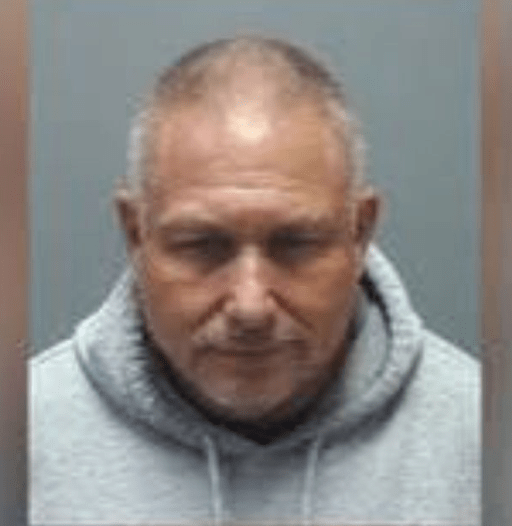
Jerry Shellhouse, 57, of Waleska, was fired from the Cherokee County Sheriff’s Office and booked into the Cherokee County Adult Detention Center on Wednesday after an internal investigation reportedly uncovered unauthorized searches of the agency’s license plate database.
Shellhouse’s arrest makes him the fourth employee of the Cherokee County Sheriff’s Office to face criminal charges in less than a year over alleged misuse of the county’s Flock Safety camera network, adding to growing scrutiny surrounding how law enforcement agencies access and use automated license plate reader technology.
According to the sheriff’s office, investigators determined that Shellhouse conducted searches through the agency’s Automated License Plate Reader database for purposes unrelated to official police work. The alleged searches took place between October 2023 and December 2025.
The activity was reportedly identified during an internal review of the system. Following the investigation, Shellhouse was terminated from his position and taken into custody.
Authorities said Shellhouse is facing one felony count of violation of oath of office as well as a misdemeanor charge related to the improper retention of license plate information collected through automated recognition technology.
As of Wednesday evening, Shellhouse remained in the Cherokee County Adult Detention Center on a $3,812 bond. The specific license plates or vehicles involved in the searches have not been publicly identified.
Investigators have also not disclosed why Shellhouse allegedly conducted the searches or whether the information obtained from the system was shared with anyone else. Those details could become clearer as the investigation continues and additional information is released.
Cherokee County Sheriff Frank Reynolds addressed the arrest while emphasizing the department’s position that its surveillance technology must be used strictly for legitimate law enforcement purposes. He said Shellhouse’s case, along with three earlier cases involving other employees, demonstrates that the agency will not tolerate unauthorized use of the system.
The case follows three previous arrests involving Cherokee County sheriff’s employees accused of similar misconduct. Those investigations prompted the sheriff’s office to review and strengthen its policies governing access to the Flock Safety camera network.
According to the agency, several safeguards have since been introduced. Officials say system audits are now conducted at least twice each year, access is limited to certified and authorized personnel, and additional training is required before deputies are permitted to use the technology.
However, Shellhouse’s alleged activity occurred between 2023 and 2025, before many of those safeguards were implemented. That means the new controls were not necessarily in place to detect or prevent the searches when they allegedly occurred.
The allegations against Shellhouse are part of a larger debate across Georgia and other parts of the country over the use of automated license plate reader systems. Law enforcement agencies increasingly rely on the cameras to help identify vehicles connected to investigations, locate suspects, and reconstruct movements.
At the same time, privacy advocates have raised concerns about the amount of information these systems collect and how long it can remain available to law enforcement. Critics argue that broad access to vehicle-location data can create opportunities for misuse if agencies do not maintain strict oversight.
Some law enforcement agencies across Georgia have responded to those concerns by introducing additional security measures, including two-factor authentication, requirements that searches be connected to case numbers, and more frequent reviews of user activity.
Privacy organizations and community groups have continued to push for stronger restrictions on the technology. An Atlanta-based coalition has reportedly called for reducing the number of cameras in operation, arguing that the information collected can be searched without a traditional warrant and could therefore create significant privacy risks.
Law enforcement officials, however, continue to defend automated license plate readers as useful investigative tools. They argue that the technology can help officers locate vehicles connected to crimes and provide leads that might otherwise be difficult or impossible to obtain.
The series of arrests in Cherokee County illustrates the tension between those benefits and the need for strict controls. While the technology may assist legitimate investigations, unauthorized searches can undermine public trust and raise questions about how sensitive information is being accessed.
Shellhouse’s case remains ongoing, and the charges against him are allegations that have not been proven in court. Investigators have not announced whether additional charges or arrests are expected as the broader review continues.
For Cherokee County authorities, the latest arrest highlights the importance of accountability and oversight when using surveillance technology capable of collecting information about the movements of members of the public.
As the investigation proceeds, officials are expected to continue reviewing how the camera network has been accessed and whether further instances of unauthorized use occurred. The outcome could determine whether additional changes are needed to protect the integrity of the system and ensure that it is used only for lawful and authorized purposes.