Newly released investigative documents have revealed that **UPS did not require the enhanced inspections needed to identify a critical defect that ultimately caused an engine to separate from one of its cargo aircraft before a catastrophic crash near Louisville Muhammad Ali International Airport. The revelations have intensified scrutiny of UPS, Boeing, the Federal Aviation Administration (FAA), and the aircraft maintenance contractor as investigators continue examining one of the deadliest aviation disasters involving a cargo aircraft in recent years.
The documents, released by the National Transportation Safety Board (NTSB), shed new light on how a series of missed inspections, engineering assumptions, and maintenance procedures may have contributed to the fatal accident that claimed the lives of three UPS pilots and 12 people on the ground, while injuring 23 others.
Fatal UPS Cargo Plane Crash
The tragedy occurred in November 2025 as a UPS McDonnell Douglas MD-11 freighter accelerated for takeoff at Louisville Muhammad Ali International Airport in Kentucky.
According to investigators, the aircraft suffered a catastrophic failure when one of its engine pylons—the structural component connecting an engine to the wing—separated from the aircraft during the takeoff roll.
Once the engine detached, investigators say the crew had virtually no opportunity to recover the aircraft.
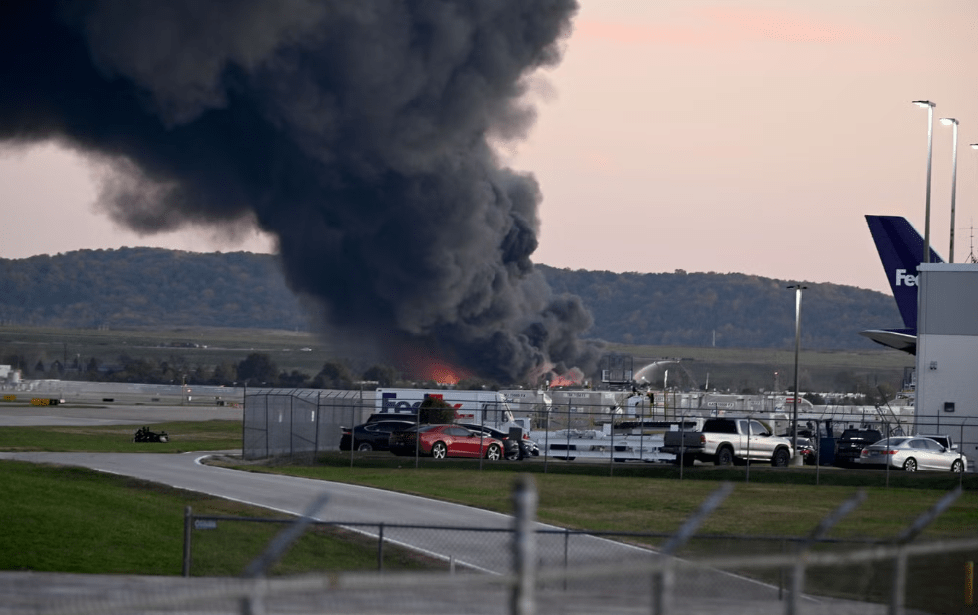
The plane crashed shortly afterward, erupting into flames and producing massive plumes of smoke visible across the airport and surrounding areas.
All three flight crew members aboard the aircraft were killed.
The crash also claimed the lives of 12 individuals on the ground and left another 23 people injured, making it one of the most devastating cargo aviation accidents in recent U.S. history.
Newly Released Documents Reveal Missed Inspections
The newly released NTSB records indicate that UPS never implemented detailed inspections capable of detecting deterioration inside critical engine mounting bearings.
Those bearings are located within the aircraft’s pylons and help secure each engine to the wing.
Investigators believe deterioration inside one of these spherical bearings eventually caused structural components known as engine attachment lugs to fail, allowing the engine and pylon assembly to separate from the aircraft.
The documents show that Boeing had previously recommended enhanced inspections of these bearings years before the crash.
However, UPS maintained that it did not require those inspections because Boeing had simultaneously advised that failure of the bearings would not create a flight safety hazard.
According to UPS, the manufacturer’s guidance suggested that existing maintenance inspections were sufficient.
UPS Defends Maintenance Program
In its formal submission to the NTSB, UPS argued that its maintenance program complied with Boeing’s published maintenance instructions.
The airline stated that Boeing’s engineering analysis indicated a failed spherical bearing would not jeopardize the safe operation of the aircraft.
Because of that assessment, UPS said it did not adopt additional inspection procedures requiring mechanics to remove engines to closely examine the internal bearing assemblies.
UPS acknowledged that once the pylon separated during takeoff, there was no realistic opportunity to prevent the crash.
The company stated:
“Once the pylon separated from the aircraft, the crash was inevitable.”
Boeing and FAA Acknowledge Misjudging the Risk
During public investigative hearings held by the NTSB in May 2026, both Boeing and FAA officials acknowledged they had misunderstood the potential consequences of bearing failure.
Engineers previously believed deterioration of the steel spherical bearing and its surrounding metal race would not compromise the structural integrity of the aircraft.
However, investigators later determined that bearing failure could allow excessive movement inside the engine mount, placing enormous stress on the attachment lugs that hold the engine to the wing.
Eventually, those lugs could fracture completely, allowing the engine to detach.
Because the bearings are deeply embedded inside the pylon structure, signs of deterioration cannot typically be detected during routine visual inspections.
Instead, mechanics must remove the engine and perform specialized inspections to identify any internal migration or movement of the bearing components.
Maintenance Contractor Points to Boeing Guidance
The aircraft’s maintenance provider, STE San Antonio Aerospace, also defended its inspection procedures.
According to company Vice President Chris Hentz, UPS instructed technicians to inspect only for corrosion rather than evidence of bearing migration or internal movement.
Hentz noted that Boeing’s maintenance documentation sent mixed messages.
Although Boeing later recommended improving inspection procedures for the spherical bearings, the manufacturer also indicated in the same communication that existing inspection intervals remained adequate.
As a result, maintenance personnel continued following the original inspection program without removing engines for more extensive examinations.
Aviation Expert Says Responsibility Is Shared
Former NTSB and FAA investigator Jeff Guzzetti believes responsibility for the accident extends beyond any single organization.
According to Guzzetti, the crash resulted from a combination of engineering assumptions, maintenance decisions, regulatory oversight, and communication failures involving multiple parties.
He said:
“Safety is a shared responsibility.”
Guzzetti explained that Boeing, UPS, the FAA, and STE San Antonio Aerospace each played a role in creating circumstances that allowed the defect to remain undetected until catastrophe struck.
He added that one of the NTSB’s most important responsibilities will be determining how responsibility should be apportioned among the organizations involved.
NTSB Final Report Still Pending
While investigators have released thousands of pages of technical documents and conducted extensive public hearings, the NTSB has not yet issued its final accident report.
The board is expected to publish its final findings later in 2026 or early 2027.
That report will include:
- The official probable cause of the accident
- Safety recommendations for Boeing, UPS, and the FAA
- Engineering analysis of the engine separation
- Maintenance and inspection findings
- Potential regulatory changes aimed at preventing similar accidents
Aviation Industry Faces Renewed Safety Questions
The Louisville crash has reignited debate about aging cargo aircraft, maintenance oversight, and communication between aircraft manufacturers, airlines, regulators, and repair facilities.
Industry experts say the investigation demonstrates how small technical assumptions made years earlier can ultimately contribute to catastrophic failures when multiple organizations rely on the same engineering conclusions.
The findings may ultimately lead to significant revisions in inspection requirements for MD-11 freighters still operating worldwide, particularly regarding engine pylon bearing inspections.
As investigators continue their work, families of the victims are awaiting the NTSB’s final report, hoping it will provide answers about how such a devastating accident occurred—and what changes will be implemented to prevent another tragedy.